


Hello everyone,
It was a bit difficult to decide which would be my first post. Shilpa and her husband (who call themselves as ‘board of directors’ of this blog) voted for this recipe. This is a pickle loved by my kids and other relatives. I noted that many of the readers of this blog also wanted to know about this pickle.
When I got married, I didn’t know a lot of cooking. I was just out of college and my grand mother hardly allowed us kids to enter the kitchen. When I got married, I had to take over the kitchen (my mother-in-law had passed away before our marriage). My husband and father-in-law were very supportive. One of my sister-in-laws who lived few kms from our home, used to visit us frequently. I learnt a few recipes from her. This pickle is one of them. Over the years, I experimented with it and we like the version I make now.
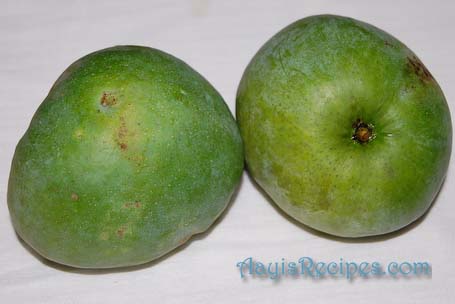
Here Koccholu means small pieces. I make this pickle with a special kind of mangoes called ‘vishad/ishad‘. Many people say it should not be done with these mangoes. But I have found that, with these mangoes, the pickle remains good for a very long time. With any other mango, the pieces become soft very soon and the pickle gets spoiled. Ishad mangoes are hard and have lot of pulp in them. They have a very unique taste to them. For this pickle, use unripe mangoes that have a hard seed(gorto). As these mangoes are very delicious and very popular at our place, no one sells the raw mangoes. During the mango season, Ishad mango trees bear hundreds of fruits. Some of the branches can’t bear the weight and they fall down. So I use these for hinDi.
These days I make this pickle mostly for Shilpa and her husband who love all kinds of pickles. When stored in air tight container in refrigerator, this remains good up to a year. I still have some from last year’s batch which I took with me when I visited Shilpa last year.
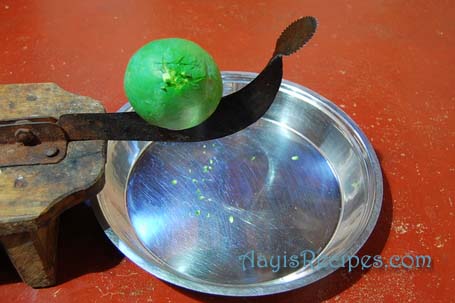
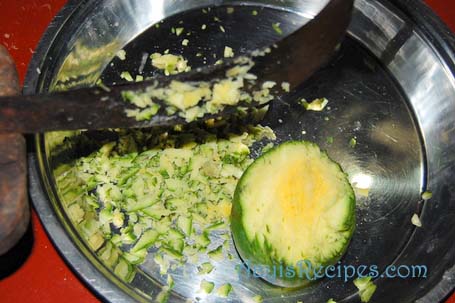
Important to note here that the mango should not be grated. I use the traditional cutting equipment called as “Addoli“. This helps in keeping the pieces crisp. When grater is used, the pieces become soft. But if you are living outside India and don’t have addoli or Ishad mangoes, use any raw mango (which has hard seed) and any cutting equipment available, but I think the shelf life of pickle would be very less.

– The pickle should be salty when it is made, as time passes, the pieces soak the salt and it also increases shelf life.
– Make sure none of the vessels have any moisture in them.
Ingredients:
1 cup mango pieces
1 tbl spn mustard seeds
3/4 tea spn methi seeds
A small pea sized asafoetida
1/4 cup chili powder
1-2 tea spns sesame oil
1/4 cup salt
Method:
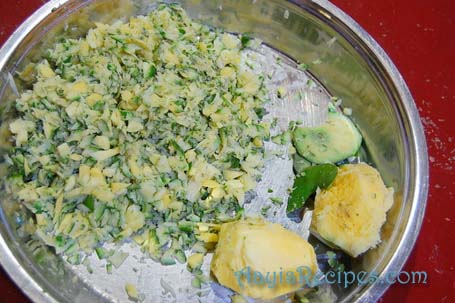
Cut mango into small pieces.

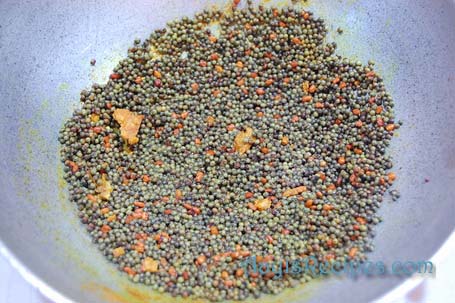
Heat oil and fry asafoetida, mustard seeds, methi seeds. Grind to a powder. Cool temperature.
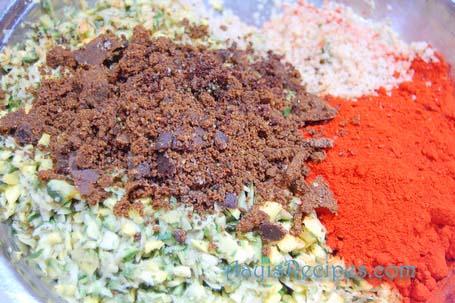
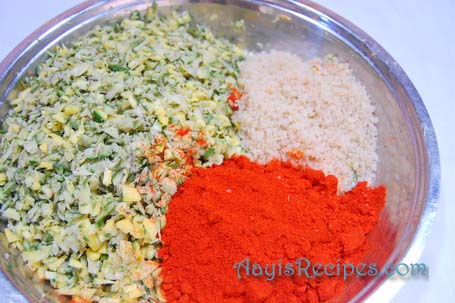
Add the powder, chili powder, salt to mango pieces and mix well.
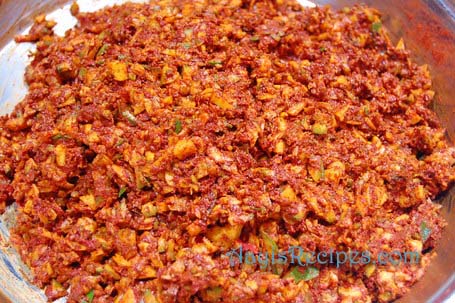
Store in air tight container.
Hope this helps all of you who love the ‘HinDi‘ pickle.
Added a video to the post on Aug 2 2020. Originally posted on May 25, 2008


Dalitoi bajey and hinDi used to be one of our favourites at home so bapamma used to make this pickle every year when we lived in Bangalore. Yummy! Excellent first choice 🙂 Thanks for the detailed pictures.
Congrats on your first post Aunty, and an excellent choice to start. I am a big fan of HinDi too. My Aayi used to scold me sometimes saying I eat it like Randayi :)..The pictures are excellent too..
Namaskara – Aunty and Shilpa! Many many thanks for sharing this recipe. Hindi is one of my favorite comfort foods! Good wishes and best regards,
Namaskara aunty,
uppinakai nodakke chennagide.
geeta
Welcome aunty… 🙂 Great recipe to start with… Delicious one! I too luv mango pickle a lot…Even my mom also prepares pickle very nicely.
Its one of the great receipies which all Indians likes!
Thanks for the receipe…
Wow..a real mouthwatering pickle..Mangoes are in season now and am going to make this ..maybe today only :))
Varadpachi, tondantu addak ayile. Maoumalo bhari udgasu aalilo. The best hinDi i have eaten till date is the one made by maouma. The colour used to be like coffee black. The other best was the one made by my mauv’s gavahe (mom’s sister’s , co-sister), who used to reside in Kumta, that colour was the one exactly as you made. My mom never made it, as it still come from maouma’s place. As for the other mai, she has passed away ages ago.
When i visit you, during my visit to Gangulli, i am surely going to have this one made by you.
that is absolutely superb! i love the photos and love this pickle! thank you for sharing!
Congrats on your first post Aunty!!! Welcome to the community. 🙂
but i have one doubt though!! are we not supposed to add oil to it?? 1st photograph looks like it has but description says otherwise!! pls explain as i do want to make it in this season. I am Maharashtrian so i have not come accros it ever before!!
Rochin.
Shilpa: Rochin, Oil is added only to fry the masala(mustard seeds, methi and asafoetida). Any extra oil is not added.
Welcome Aunty..
Nice to see our Ishaad maavinakaayi here..
I just love Ishaad maavinahannu,which is very famous in Ankola..
Good post..
Luv
Preeti
Namaskaru Maiiye, bhaari chanda dista kholu, ammi SK-chi.
Ammi hakka khola nonchey mhantati…megeli ammaka nonche malyari bhaari preeti..Dhanyawad post korche katiri! Santoshu jallo tumgele surve post vajjunu! 😀
Mrs. Varada, I was fortunate enough to be given a taste of your marvelous pickle: it is absolutely, astoundingly-delicious, and, as I think of myself as a pickle fanatic who for keeps many jars of different kinds, you must believe that by far this is the best recipe that you could have posted as your first! I look forward to your sharings in the future with much anticipation, but know that I am already so thankful just for this…
You could sell it!!! 😉
This is one of the most delicious mango pickle i’ve seen.
Wish i was shilpa, so i would get a pot of the delicious pickle rather than drooling on it 🙂
My mouth is watering!:D
I love that Mane as we call it, my ajji has a huge one and we were always scared to go near it because it used to lie whole day openly in the kitchen and we were city slickers!:D
Pickle looks great, I don’t get good Maavinkai here!:(
hiiiiii …i jus loved this dish….it luks spicy an temptin ….so,im goin to try tis out….
oooooppsss….
i hav to leave to try tis out….
hello aunty,
welcome and thanks for the wonderful recepi.
Welcome, Mrs. Varada! What a wonderful first post. Looking forward to many more.
Namaskar Varad mai,
te aDDoliri ambo shinduche palaitana makka megele annale uDgas aile..anikai mast randap galka mai tuve
The picture of chopping on the traditional chopper brings me memories of my Dad..Looking forward for more recipes from you
-Shilpa’s blogger friend, Manjula.
Shilpa,
Congrats on the promotion to the Board of Directors 🙂
Hey Aunty 🙂
Finally we get a blog from someone we hear so much
about !
I have almost run out of my mango pickle and was looking for something new 😀 so good for me! This is going to be my next mango pickle.
Thanks and regards
Seasons
Namaste Aunty, its really a great feeling to see you here. This is real treat for any pickle lover! And the chopping instrument you described is reminds me of home! We have something called “daat” in Punjabi, which looks very similar and is used to chop saag and fruit for pickling :).
Welcome to the blogging world aunty! Thanks for this delicious post with the detailed instructions…. Can’t wait to see all the amazing dishes you are going to share with us!
This is called a perfect Mother’s recipe….very nice recipe aunt..
Varad mai,
noNche polonu tonda uda aile[:(]…
Thanks for taking time out of your busy schedule and helping us newbie’s[:)]
Hello Aunty
Loved your post. That pickle looks mouthwatering.
It is great that Shilpa roped you into blogging too, wishing you all the best for your weekly blog posts
Dear Aunty
Welcome — I have always liked Shilpa’s website and thank you both for sharing your wonderful recipes with all of us!! Looking forward to seeing many many more….best wishes
welcome Aunty
oops !!!!!!!!!!! its yummy and mouth watering pickle
good start Aunty!!!!!!!!
keep it up
Thanks aunty for sharing the recipe .Its my favourite pickle which my grandmom makes in Mangalore.Special thanks for giving this recipe which has ingredients in smaller quantity.
nice step by step pics
Hi Aayi
awesome post, moms always rock and they are IT savvy too. look forward to seeing more receipes.
Beena
Varad Vaini,
So nice to see you in the blog world. Shilpa, I am glad you dragged your aayee into this. I hope to see more recipes.
HinDi/HinDli is one of my favourite pickles too. My aayee always packs it for me for the same reason as it lasts longer. Well, it doesn’t stay long at our place for obvious reasons,just like Maya said. Both my husband and I eat it like upkari/randayi 🙂
I have now put all the ingredients together and it is aging, but I have already tried some and it is so delicious! (it makes me dance with my eyes closed) :-)Your proportions for the flavour of the masala is excellent! Thank you so much…
Hello Mayye….
The hindi recipe is fantastic…very detailed and informative….thank you for this one….
Hello Aunty!! Wonderful to have u here!! and WHAT A SMASH recipe to start off with !!!!
Too Good!!! that pickle is making my mouth water!!!
Delicious! One of my favorite pickles. My mom used to make it a lot. Thanks so much for sharing this recipe with us, aunty. Looking forward to more posts from you.
Welcome Aunty. It is so wonderful that you will share your recipes. We are all so humbly grateful to you. I am looking forward to all of your stories of your life and your cooking adventures, and to seeing the photos. Thank you so much.
What a fantastic first recipe! Great to see you here, Mrs Varada. This pickle looks like some work but, wow, the colour is so appetizing! I have never made or eaten this kind of mango pickle! That will be rectified right away!
hello aayi(couldn’t think of any other name to address u:)
i am really glad to see ur first post and that being my fav pickle. i am going try this picke in small quantity by chooping the mangoes to small pieces and will let u know how it turned out.
my amma use mettu katti, as we call in m’lore, for chopping almost every vegetable and fruit but i dont even dare to go near it as it scares the hell out of me 🙂
Hello Mami,
Your hindi looks mouthwatering,its been a long time I ate it,always used to love the hindi which my amma made in Kodkani….
Thank you so much for sharing this special recipe, Aunty! 🙂
Mami,
Welcome to the blog world. Hindi looks simply yum….. shilpa,can i give my address to send it some.. just kidding. luck you….
Thanks again mami.
Varada-maushi, you are just like what your daughter says you are and more! I am savoring this pickle of yours. I guard it with my life and have hidden it in the deep recesses of my refrigerator lest other family members find it and start eating it. It is simply out-of-this-world delicious! I won’t get vishad amba here but I will try this with any unripe mango that I do find. And my vili (addoli) is in Bombay. I do have a bucketful of love that I will pour into it so maybe that will make it taste almost as good as yours! Welcome and thank you for your wonderful post!
Hello Aayi,
This is an excellent effort of shilpa to convince you to take charge of posting ur recipes,and also hats off to u,to actually be in sync with modern technologies
The pickle recipe appears to be gr8 and i m happy that it came up just at the right time,since this is a pickling season here in mumbai.
Hope to see more of ur culinary expertise here on this site
Great start with a superb recipe Aayi..:) Looking forward for more..:D
Siri
Hello Pacchi,
I am having tears in my eyes, and actually touched the screen —to feel. It was how my moamouma used to make—we could store for year.And all of us used to relish—-As I started cooking I have realized the love she she had for us—-and the pains she took.
kochale nonche polunu—mast pura vudghasu aailo.
aash baari tha raaba thumi.
thank u shilp
pratima
Welcome, Aayi to the blog world !!!
What a debut, that too !!!
Tumgele Kocchla Lonche polonu tonda uddak ayle !!!!
I love this with Dali thoy !!! Brings back loving memeories of my childhood summers !!!
We all look forward to more interesting recipes and your worldly knowledge on cooking to please our loved ones !!!
wow…..aayi finally is here!!!!!!!!!!!welcome aunty! i guess all of us are so happy 2 hear from you……pickles look grt….funny enough i also made mango pickle with my mom- in- law when she visited me last week…
Dear Mrs. Varada,
Welcome! It is so kind and generous of you to share your knowledge. After reading so much about you, it’s wonderful to see a post directly from you. The thali you made for Shilpa is simply beyond words – beautiful 🙂
It is so kind of you, Shilpa, to share your dear Aayi with us! 🙂
Excellent kochla nonche, maayeh. Thanks a lot for sharing the recipe with us. How long should I wait for the pickle to get ready so we can eat?
Shilpa: Anupama, you can eat it immediately. But after 2-3 days the mango pieces soak the spices well and taste increases.
I like this mamgo pickle, i make it often. I add whole black pepper along with asafoadita, methi & mustard to fry.
It give a great aroma.
Dear Aayi,
Welcome to the blogging world! I’ve been a regular reader of this blog and am glad to see a post from the inspiration! It’s great to see someone use the old-fashioned cutting knife – the luddite part of me definitely appreciated that. 🙂
Hi,
Mouth watering
Thanks a lot for the recipe let me try this
simple super with curd rice
vidyamali
there is no kadgi adgai recipe here???
Shilpa: As of now, No.
Can we get the recipe of mango pickle done at sagar, it carries some different but awesum taste
Hello! I found your site because I am searching for a pickle recipe that can be made with unripe fruit. I have never made Indian pickles but I have eaten plenty and it seems like a good way to use up some unripe nectarines that fell off my tree. What do you think about trying this recipe with them? Do you have a better suggestion?
Hello aunty,
First of all let me thank you and of course Shilpa, for sharing such mouth watering, delicious and healthy pickle recipes. I love pickles and so my daughter. I have tried few of your pickles and all were super hit. But this was the simplest and tastiest. As i was aware that it will get finished very soon, i added very less salt and red chilly powder. But still it turned out very tasty, as always.
Thank you once again.
Hi Shilpa,
can i use regular vegetable oil or olive oil for making this?
please let me know.
Thanks
Yes, you can use vegetable oil
Thanks.
Hi Shilpa,
I made it today..i liked the texture..but on tasting it has come out bitter..i know its too early to taste..but does it taste bitter before pickling?
please let me know.
Thanks.
Give it a day or two and see how it tastes. If you have not burnt any spices, it should not become bitter
it came out very well.very simple and tasty.only thing we should be careful while frying mustard .if it gets over fried,bitter taste will come.
thanks for ur tasty mango pickle recipe.can you give recipes for lemon and gooseberry too.(red colour pickle).
lemon pickle is already on the site
SHILPA KINDLY ADD AMBULE NONCHE. FORTHCOMING TENDER MANGOES SEASON.
Hi, I tried out this recipe and tasted it immediately….it has come out bitter ….just want to know if the mustard should splutter while frying or to be taken before it splutters…also, can you tell me the quantity for asafoetida in the powdered form..i fried all the three mustard,methi nd hing together in 2 tsp veg oil…i shall keep it for two more days nd then taste as mentioned in one of your replies.thanks.
Pingback: Green Mango Pickle, Andhra-style | A Mad Tea Party
Thank you for this recipe.
I have a lot of “mango pickle” (same like above recipe…but big mango pieces) stored in the fridge which I want to finish it off by using regularly.
In my house, I am not making “peji”. So the pickle is not used by anyone even with the normal rice. I don’t want to waste those pickle which are really in a lot of quantity (big size bharni full).
Could you please tell me: In which recipes can I make use of this mango pickle? I mean, Is there a recipe where I can use a table spoon of pickle while preparing any dish?
I want to know if there are recipes where I can substitute with a table spoonful of my mango pickle. I want to use it in my regular cooking, then only I can finish off the stock of my mango pickle. Please help!