

Many people had asked me to post ‘how to make soft chapathis and phulkas’. Finally I am here with this post. Those who are expert in chapathi/phulka making, skip this post.
My experience with chapathi/phulka was very bad. When I started cooking, I could never make soft chapathis/phulkas. They used to come out very hard. I still remember one incident that happened in my previous office. There was a bachelor guy, who was very humerous and never missed any chance of pulling my leg. He used to sit beside my desk. One weekend we were working and he said he was very hungry and asked me for my lunch box. Though I warned him about my chapathi, he insisted on eating it. When he tasted it, he said, ‘Shilpa, me isse acha roti bana leta hoon (I can make better chapathis)’. He went on commenting how bad were my chapathis. That was the biggest insult I have ever got. Then he went on telling people about my chapathis. After that I tried and tried and now I can make the perfect soft chapathis.
So here it goes….
Take 2 tbl spoon of water and add 1/2 tea spn salt, add 1 tea spn of oil to make the chapathis soft. Then add wheat flour (1 cup). Mix and gradually add water/flour to make the dough. (Some people make the dough with warm milk to make the chapathi/phulkas soft). Now apply 1-2 tea spns of oil to the dough. Keep it aside for around 30 mins to 1hr.
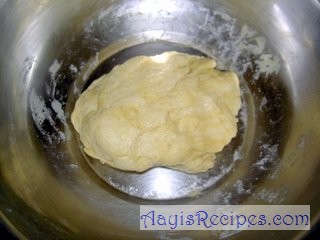
(Chapathis/phulkas can also be made without milk and oil. But I usually add oil, have not tried milk any time. My mom makes very soft chapathis without oil and milk. She just keeps the dough for around 1hr before making chapathis/phulkas).
Most important thing to make them soft is
– Dough should not be very hard
– Leaving the dough for 1hr before making the chapathis/phulkas
– Frying of the chapathis/phulkas make a lot of difference. So I have taken the pictures of each step.
– Do not leave chapathis for longer time on the tava, so use hot tava for frying.
– Once fried, stack the chapathis/phulkas one above the other and immediately close the lid. This keeps them hot and soft. The chapathis/phulkas which are down in the stack are more softer. So reverse the stack after some time, so that the topmost becomes the bottommost. This way all the chapathis remain soft.
Chapathi:
Usually for chapathi, the dough is made into a small puri, ghee is added in the between and folded into triangular shape and then again rolled to make chapathi. This procedure makes the chapathis more soft. Usually chapathis are more thicker than phulkas(it is not a hard and fast rule).
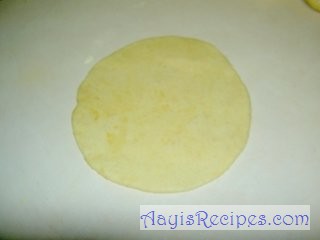

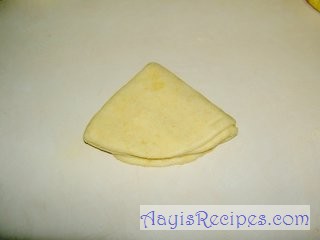
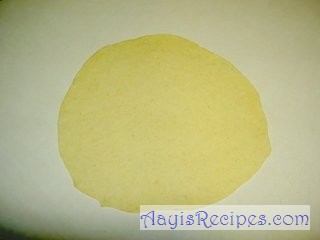
Take extra care while frying them. Heat the tava to very hot. Then keep the chapathi. Turn it when you can see it fried from down.


Fry on second side then turn and fry.
Then turn again ie, each side should be fried twice to make sure it is fried properly. (At the max turn it thrice, if it is turned again and again, chapathis become hard). Then apply ghee. (Unlike phulka, chapathis are fried completely on tava, but phulkas are fried on tava and then on direct flame).
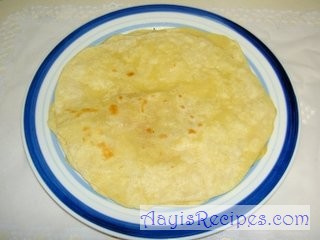
Phulkas:
Roll the dough as thin as possible (no folding).
Keep the tava on hot tava and reduce the flame. When you can see just white patches, turn it (chapathi should be fried as more as possible during each turn, but for phulkas, the side should be fried only a little on tava, see the below pictures).


Turn and then fry on the second side.
This side should be fried a bit more than on the first side, it should be almost fried from this side).
Now on a high flame, keep the phulka on direct flame (first side down).

Within one minute the phulka puffs. Slowly remove the phulka from the flame.
PS: I normally use 1 cup water to 1 and 3/4 cup to 2 cups flour. This is approximation only. If you feel your dough is too soft and you can’t roll it, add little more flour. I use Pillsbury chukky fresh atta which gives very soft chapathis.
If none of the above things work, try making them like jolad rotti here by cooking the dough. This method is guaranteed to work.

Lovely Shilpa… Great for beginners. As you mentioned abt adding milk, i have seen in Mumbai many Maharashtrians do it , to knead into a soft dough. I have seen this in Belgaum side also. Here the chappatis remain soft and fresh upto 3 days. So it is packed for outstation train journeys. Lot of patience you have to take so many pictures.
Thanks a lot shilpa 4 posting this recipe.Will surely try it & let u know.I’d read it on some site that one should knead d chapati dough by adding some warm water and leave aside d dough 4 1/2 hr by wrapping a damp cloth around it.This helps d chapati turn softer.Also i’ve read that one should either avoid using oil [while kneading] or should use it very little as d chapatis turn hard while frying it.
good post indeed shilpa… i know it is very useful post for most of us… thanks for sharing it with us 🙂
This is great! So helpful…
I too made appalingly bad chapatis until recently. Now they are inconsistent and “OK”. Which is a whole lot better than terrible and hard.
The big differences for me have been letting dough rest at least one hour, and making tava very hot, as you note above. I’m impatient, so I always used to rush these steps. I’m engaging in “project chapati boot camp” this summer and am COMMITTED to improving my chapatis so they look as nice as yours do. They are getting better every time I make them – I am inspired by this post.
Oh that was so bad of your colleague!From my experience i shall share one trick,I have found that from the risen dough,pinch a lemon sized ball and then roll it into a smooth round between your palms,there should be no creases and then flatten it with your fingers and later roll it flat using a rolling pin.
Makes me want to start kneading the dough immediately……..;) Nice post with good pictures.
Thanks Shilpa! This is so awesome. I will surely follow your instructions the next time I make Phulkas. Can you show us how to make perfect puris as well. Mine are never consistent. Many a times they are like papad! What is the trick to making soft and flaky puris?
thanks shilpa, this is so good.my chappathis and parathas are fine but phulkas still stay a little hard..i have to try your way. thanks for the step by step.
Thanks all.
Shalini, search for ‘puffed puris’ in the search box. You will get a link ‘how to make soft and puffed puris’. Follow any one of the methods there. I am sure you will be able to get perfect puris. Still if your puris dont come out well, let me know.
Thank you Shilpa, what a useful and informative post. Great !!!
Hey Shilpa,
My saturday morning project today was to try to make some chappatis, like my mum makes them – my first time !!! I was quite proud of the fact that they were round and actually turned out quite well. But grew quite crisp after an hour or so.
Thanks for your tips. I will try to keep the dough for an hour, before using it.
Terry
really good…am sure to try it out tonite itself for dinner
to make best and softest dough i make this way.
In a food processor;
add 1/2 cup water, add 1 Tablespoon of oil, 1/3rd TS salt and then add exactly level cup of wheat flour. Run the proceesor for 15 to20 sec. pause and another 10 sec or so and the dough ball starts rotating inside. oh what a silky soft yet firm dough it makes. u wud fall in love with it. this dough stays fresh outside longer and refrigerates well too. it should make 10 small Philka’s from a cup of flour
Terry,Glynis let me know if you get good soft chapathis next time.
Annie, thats a good tip. I never used food processor to make any dough. Let me try it. Thanks
Thanks Shilpa,
Appreciate your patience & way of your presentation. Its very nice step by step teaching. after reading i was just thinking you took so much effort to show all of us through photogaphs i dont think anybody will take such efforts freely. Feel like making chapattis now…..I liked ur flffy phulka but it didnt get black on other side asit was on direct flame????
Regards
Anagha
About Phulka Roasting;
Phulka usually is roasted on Tawa or a pan on one side until that side bears brownish spots, indicating well roastedness and then a white side is faced towards the flame.
But many households have electric coils instead of a gas burner so phulka can not be placed directly for puffing but a stand with a inch or more height can be placed first and then the phulka is placed with white/plain side down helps it puff like a ball.
once it roasts for 5 to 8 seconds it can be taken away on a plate. The steam generated in the puffed phulka is enough to cook it from within, especilly when thinly rolled.
If u prefer thicker versions u wud want to roast it longer for through cooking. Many of north indians prefer such fresh, little crispier phulkas. they usually do apply a little(!!!) ghee to keep them softer longer.
I prefer little OIL on my fingertips to smear the phulks. OIL ensures the softness even after storage in refrigerator while ghee can make rotis brittle or flake away of reheated. Such rotis are the best mates of any curry.
Good one! 😉
Well 🙂 seems to be all women here men evry busy at work!!! or is it that this is a womens only forum:) anyways many thanks to the phulka and chappathi recipies. Tried them out and they came out pretty well.
Chk out this site for some good dals :http://www.syvum.com/recipes/indian/srcpl1.html
Enjoy
My mom makes it this way:
For 1 cup of flour, take 1.5 cups of water in a thick bottomed vessel, add salt bring it to boil, add the flour and keep stirring.. .continue till water is completely absorbed (max will take 2 mins).. Then take the dough on anoter vessel and knead.. keep aside for 10 – 15 mins. Then make chappatis 🙂
Hello Shree….that is called bhakri which is made out of rice/bajara/jwari flour. as I know we cant make chapatti’s like that. My mom makes those RICE ROTI/BHAKRI very tasty.
Hello Shree,
It is called BHAKRI………My mom makes it by RICE/ bajara/jwari flour…….My mom (Suraiya Shaikh) makes yummy chawal ki roti(in Urdu). If anyone needs will share recipe.
Gulnaz, Thanks. Bhakri is on the site here if anyone likes to try.
Amazing shilpa…….Those step-by-step procedure with pictures were really helpful….I made awesome chapathis but with heating coil i dont know how to make phulkas.It didnt puff…Is flame compulsory for phulka making??
Priya, I think the coil should not matter in puffing. Did you keep the dough for sometime before making phulkas? also, follow the steps in frying exactly as shown in picture. It might take sometime before you master making phulkas. Even I took a long time to make them puff.
SHilpa,
I made the chapathis for yesterdays party and it came out so soft n even fluffy,….Everyone appreciated about the chapathis.
As you replied , i should master the techique of making fluffy phulkas rather than making burnt rings on my chapathis 🙂
Thanks,
Priya
Ohh thats good.
Sorry to know about your phulkas. Keep the heat on medium or low and try next time. Beleive me, even though you would burn them a couple of times, you can master only by trial and error. Even my phulkas had that black ring initially. Now I can say they come out really well :). All the best
Well, this is a nice thread. I was just searching for chapathi recipes, as my first attempt came out just OK. I will definitely try your method, Shilpa. Thanks.
Hey thanks for this post…while I can make decent phulkas my chapatis are still not great…But practice will make me good….I never kept a count of how many times I fry them..now I will thanks to you
Well, my wife (Sadhana) taught me to add Tofu (silken) to the chappati dough. The chappatis retains its softness for a longer time and also increases its protien contents. Alternatively, thick curds can be used, which is normally i used for Puris.
Has anyone tried making dough in a food processor? It is predictably soft and not too sticky dough. It allows u to make soft rotis right away without a wait. as soaking of wheat flour is done best by the processor blades. ofcourse if u let the dough sit idle for half an hr is great. but many atimes we run out of MOOD to make chapatis by then. does anyone agree?
Each time I make a sevearal batches of dough at onece. but I keep this ratio constant. after several tries of standerdizations i finally settled with this;
In a food processor Add half cup water, 1/3d Ts salt, and 1 Tb of oil. This ensures no mess later. no sticking of flour to the proceesing bowl.Then on that I add 1cup of wheat flour. just run the machine few seconds. pause and run again. the tenis ball size dough ball starts spinnning in and u know it is well done.
since no mess, no sticky hands, no contamination this dough lasts well in ref so well. pl do try. rolling phulka or chapati with such dough is a pleasant experience. it allows to roll thin rotis. do give a try.
If u feel removing a food processor just for the sake of dough a big hassel, consider this; first i make a dough, then i throw in 3-4 onions in the processor and chop them rough or fine as i need for vege preps, Remove onions throw in some chillies and chop, remove chillies and then chop chop some fresh corinder leaves, followed by some corrots big chunks for coarse chopping( which i make in to carrot raita ) and tomatoes at the end. I dont have to wash the processr at all. Remember after the dough ball is formed there is nothing stuck in side. so i dont need to wash before i put my onions. the tomatoes at the end has bits and pieces of cilantro but that is ok. this makes my cooking so easy and quick. at times i chop extra onions to keep them handy in refrigerator. Thanks. hope u find this tips useful.
Shilpa et al u have done great job by running this site.
Hi.. I too use food processor for chapathi dough ..same procedure as urs, and comes out soft..But i use only for dough..do not like to change blades etc..
But please do not cut onions for storage..only fresh onions..
Hi Shilpa, thanks for all the detailed information.
Worth every picture you took. 🙂
Keep up your excellent work.
Best regards,
Roshan Pai
Hello Shilpa,
Last week I googled for some recipe and came across your site. It was like finding a treasure. There are so many things I liked about your site that I do not know from where to begin. The best thing I liked is the name” aayi’s recipes”. Your recipes are tasty and traditional yet very easy to make. You have taken great efforts to take snaps at each stage of recipes that I do not remember seeing anywhere else. I enjoyed reading introductions before each recipe. I also liked the layout of the site. All in all it’s a wonderful site. I will write again to ask for few recipes.
Keep up good work,
Smita
hi i tried making chapatis in processor and its coming super soft. thanks annie
Hi Shilpa…
I was just laughing at your post. I was in a similar situation with the chapathis I make. My collegue at work always said he makes better chapathis than mine…. My mom makes soooooooo soft chapathis but mine are not worth talking about even… So hopefully going your way should improve my ability to make chapathis. Today I am going to try for the third time… Wish me luck 🙂
Jovitha, all the best. For correct measurements, add 1 and 3/4 cup of flour to every 1 cup water. I am sure they will come out fine. Let me know your experience.
Dear shilpa,
I agree with every one.. you really have a good patience in explaining in detail with photos of the steps which is really very useful… Thank you so much.
Its a very good tip too.
You can also start of mixing the dough by first adding a teaspoon of oil, then a 2 pinch of sugar, flour and then water with salt….this also works out for a softer chapati…
thanks againg…
cheers
Shannu
Hi Shilpa,
For the first time I got to know about this website.I saw your detailed explanation about making chapatis and pulkhas soft.Really great job.
This helped me in improving mt chapatis.Thank you very much
Cheers
sireesha
Hi Shilpa,
Suggestion..Please use a different word for ‘frying’. We do not fry the chapati rather we ‘roast’ it? The ‘frying’ word is inappropriate and confusing.
Hi Annie,
The food processor u mentoin is a other word for mixie right?
(Indians call it mixie in slang).
very good
Pingback: steelsphere.com » Indian food
How can I preserve rotis for 15-20 days?
What should I do To keep them fresh?
Prajakta, somehow I hate anything that is more than 2 days old. So I never tried to save chapathis more than a day. I will try to find out.
Shilpa,
Excellant 4 a bigginer like me.
I AM GOING TO TRY IT IMMEDIATELY
THANKS.. Moni
Hi Shilpa,
Is food processor the same as a mixie.If not kindly let me know the correct brand name and its cost.
Normally,mixie and food processor are not same..
but now a days there are 2 in 1.. if ur product says or gives an atta kneader only then u can use it.
else u can google it..there are different costs..different varieties..
i have maggi atta kneader..works on mixie ..working good..
Ramani, I never used food processor to make chapathi dough. So don’t know much about it. Sorry.
Hi Shilpa,
In Trinidad the chapati is filled with a powder made from cooked and dried peas. A lady from Suriname who worked in a Dutch hospital explained to me how this was done. Take a ball of dough, make a hole in it with the thumb, put a small spoon of peapowder inside, close the ball by folding and then flaten the ball as normally done. The result is fantastic! The chapati is then folded around a currymix(potato or chicken)
Kranendonk, we call it stuffed parathas. One example is potato(alu) paratha.
Thank you for your info potato paratha. This is not what I meant. However after further browsing I found Caribian Child and than TnT Cookbook in which Dahlpouri Roti. The cookbook is very interesting and shows that the Trinidadian Indians probably came from a distinct part of India and as so often is the case took their kitchen and medical recipes with them. In the late sixties the WHO send students to gather these because in India these hed sometimes gradually been changed by certain influences. Thanks again and good cooking!
Krenendonk, sorry for guessing it wrong. I think you will get Caribbean food in Cynthia’s blog. She introduced her culture and recipes to us, before that I never had a clue about it.
With such variety and such a large country no wonder to pick another recipe. When we talk about Indian food we could also say European food and everybody knows thar Swedish or Italian food is totally different. The same thing goes for Chinese food! Any way google to “carribbian child” and than select TnT cookbook. Also well designed and clear.
What a wonderful world that we can converse with ease with all members of the human race! I am 83 and started with the IBM 360. (RAM 400 bits!)) an access with punched cards and printing witk character chain! I do this on an Apple. What do you ues? Best regards, Kees Kranendonk
Hi,
I make terrible chapatis. In fact, if I dint explain to my family the thing they are eating is chapati, they would think they are having papad for dinner!!
I have a question – does even rolling of the dough have anything to do with the softness and/or fluffiness?
Thought kranendonk might be interested in this bit of info – my MIL makes this amazing roti called “Sattu Roti”. It is a stuffed roti and the stuffing is basically chick pea flour along with spices, garlic and onion. I think it is a Bihari specialty.
Rema, please follow the method I have mentioned above. For every cup of water add 1 and 3/4th cup flour and little salt, oil. Mix very well. The more you kneed while mixing, the better (I tell my hubby to knead it, he keeps on kneading till it gets a perfect shape and the chapathis turn soft). You have to keep the dough closed for around 30mins(minimum) before rolling.Do not mix too much dough while rolling. If you fold them, apply ghee in between, so they remain soft. Do not turn them again and again while frying. These are the factors I take care while making chapathis. I use Pillsbury’s or Sujata wheat flour.
Hi Shilpa,
firstly, i love the detailed steps in your page!
i tried the steps above, but i think there’s something wrong with my tava? i had to flour the chapati so it wouldnt stick to the board when i was rolling it. so the excess flour on the chapati gets burnt on the tava. what should i do?
Brenda, do not apply too much flour while rolling it. If you have made the dough very soft, then only this problem comes. I use 1 cup water to 1 and 3/4th cup flour. After you make every chapathi, wipe the tava with a paper towel, if you feel there is burnt flour on tava. Yes, tava does make difference. I bought one in Walmart few months ago, and it starts a big smoke when I try to use it.
ok, thanks shilpa! i’ll give it another try. i think my dough was too soft.
Thank you very much for nice chapatis I had the same problem for making them soft now with you step by step I can make family ejoyful. Thanks once again.
wow, just what I am looking for, great tip & photograph. Will try keeping the dough for 1 hour and make the tava HOT. Thanks !!!
I have couple of suggestions on Chapati/Phulkas (C/P).
Being Mumbaikar(Bombayite), I grew up with C/P as during those days my parents used to get wheat/rice on ration cards only (during/after WW II and independanc)); that is why ration card was like modern Driver’s License in US for identification purpose in Mumbai even to get bottled milk from Aarey Colony and to get Kerosene in those shortage days.
As I had noticed, Gujerati and Maharashtrian house wives are experts in cranking out 100’s of Phulkas in minutes and eating those Phulkas as comes off from Sagadi(Indian Charcoal burner, and not gas stove like in US), serving immediately.Eating with Daal or any Subjee(Veggie curries)is more enjoyable than one (or restaurant)who prepares a stack of Phulkas and then serve everybody later. Similarly, most Konkani(or South Indian) Mom, or sister or wife has been credited for making Dosa one at a time (rather than a stack) and serving to their guests or family members or Hubby and derive pleasure or satisfaction that they get flattered(in true sense!)and get pat on the back for well-done job.
So, the point is Phulkas you can enjoy more when one person makes one at time and other person starts eating it. There are still few old fashioned specially Gujearati restaurants in Bhuleshwar and Girgaum area of Mumbai, where I used to eat unlimited lunch for 3 or 4 Anas(One ruppee is 16 Anas)with garam garam (hot from oven)phulkas with daal and one subjee. Even now , every time I visit Mumbai, I visit one or two such restaurants(now lunch is over Rs.80, and it is still a bargain though!!) and try to escape from Konkani food prepared by Aunties or Vanhis(Bhabhi) or sister.
I have learnt by experience here in US that,you can buy semi-readymade thin chapati pack from Indian store or Mexican whole wheat (one brand is Guerraro) and enjoy youself 80-90% like Phulkas two ways. One is of course directly on the fire with your expert palm finger (or pair of ice tongs)in quickly rotating fashion; and second method is on the cast iron tava(flat pan) and tapping gently on the roti 3-4 places by SS spatula(Kailato)while it is being grilled without ghee, and boy, it rises like full blown puri.Initially you might have to play around a little bit until you get proper skill and hang of it.
Hi, never seen or heard of ss spatula or kailato. Can you please post an image and a substitute name if any for the same. Where is it available in Mumbai or Bombay? PVP
hi shilpa, Could you tell me how to make longlasting chaptis. I am a student and when I come back from university, sometimes I dont have the mood to make chapatis.yet I love chapatis, and cant live without it for long.
Here, in Malaysia we get instant chapatis and paratas from shops, which we just have to cook over tavaa.
But it could not beat the homemade ones.
Is there special way to make the dough, roll it and keep in the freezer , to be fried/cooked whenever I want.
Great explannation indeed..Really helpful for beginners!!
Hello, very helpful tips on chapati thanks. I am in New Zealand making idlis and chapati and was wondering if rice-based and wheat-based breads are completely seperate in Indian tradition. Are there any breads (or roti?) which include both rice and wheat flours? Thanks,
Daniel Munn
dmun023@wrexham.net
Auckland, NZ
Hi Shilpa..
Just looked in to ur site the other day and tried u r phulka’s.For the first time it came out so well..My hubby just loved it..Thanks a lot 🙂
Shilpa,
i m very glad u posted chapati-phulka wt great efforts – snaps+elaborate expln+tips! amazing girl u r!!! i hv tried making these and not only r they soft after making,stay soft next day too..(since i had made too many)
i m still having phobia of phulkas (having burnt them earlier), but ur chapathi, puri recipes hv been a huge hit wt me & family so i shall surely try ur way of making phulkas too!
hi shilpa,
great.wonderful.previously i used to get hard chapathis.i was almost fed up with them.i thought i will never get soft chapathis.But you procedure has made it possible.Your step by step procedure with pictures is very nice.thanks a lot.i made the chapathis in your method and they turned out very soft.thanks alot.very helpful website.
This was great… I made chappatis twice and they came out soft and delicious. I used the mixie version… thanks, very helpful.
Hi,
Even though I’ve made chappatis off and on for past 6 years I’ve neer perfected it. I plan on trying the exact proportions mentioned in your site. I really, really hope this works.
Thanks,
SV
hi shilpa,
I am very new to ur site.i enjoy going thru it almost daily now.hope i too start making soft phulkas with ur tips given…very helpful indeed.
Hi Shilpa,
just like almost every1 out here trying out their hands at chapati makin. me too had a fair share of hard knockin chapati experience. looking at your recipe & comments,i’m gonna try out my hands again after a very long time. after trying your recipe, i’ll leave comments. thanks a million…
Hi Shilpa,
tried the recipe as mentioned and it turned out perfect and soft. recieved praises from my sis…hmmm…yummy…turned out excellent. thanks a million…
however, would like to add a comment. i used warm water to knead the dough but the dough was very sticky and even after 1 hour, there was still stickiness in the dough. so i managed to dust extra flour to knead and roll and it just came out fine…hope i’m doin it the right way….
thanks a lot shilpa….:)
Shilpa: Veera, did you try 1 cup water to 1 and 3/4 cup flour? Try with that next time…If you mix too much dry flour while rolling, sometimes chapathis get hard.
Hey Shilpa
My phulkas always get burnt when I put it directly on electric coil. So I dropped making phulkas. After reading ur article I think I was doing it all wrong. May be I should have used a stand. Does it works?
Shilpa: I am sorry Anju, I have not used stand any time. I directly fry it on coil on a medium or low flame. One needs to be really careful while doing this.
Hi Shilpa,
i did used exactly 1 cup of warm water to 1 and 3/4 cup flour. added a pinch of salt and tsp of ghee. did twice but the dough is still sticky….any advice ? thanks.
Shilpa: I have no idea what went wrong Veera. I again tried the same proportions today and it works out just fine. I don’t add ghee, I add 1 -2 tea sps of oil after mixing. It kind of coats the dough.
Hey Shilpa
Few more doubt Shilpa, which flour did u use for making phulkas? The flour should be finner or thicker when u feel it?
Shilpa: If you need the texture of chapathi to be very soft, use the finer one. I use Pillsbury chakky atta which is very fine. It never fails to give good results. I have heard whole wheat atta is best for health, but the texture of chapathi/phulkas does not come out as good as the one with fine atta.
Hi Shilpa,
I can’t believe this. My rotis turn out very yummy and I have proof to offer. My baby (2 years old next month, who always resisted rotis) eats a couple every night. She eats it with marmalade though. She even likes it with methi and masala.
Thanks so much to you and this wonderful website.
Lots n’ LOTS of love,
SV.
Thank you so much Shilpa. I used to use Golden Temple(durum) flour, let me change to Pillsbury n give a try. Will let you know how it turned out. Hope I will not burn phulkas this time. 🙂
Hi,
I use an electric coil burner not a flame burner and since mine is an apartment, I don’t have a choice. My mom and I both use stands for phulkas. It gets very hot in the kitchen when I do this but it’s only for a short while. So I do it on med-high setting of electric coil and with a stand which I found someplace. I tried the same on cookie cooling racks by raising it a bit, but my efforts flopped big time back then.
SV.
Hi,
Thanks for posting this … I am a terrible and now I am able to make better chappathi.
I have to pack them for lunch … can u please post some side dishes – dhal etc.
Shilpa: Priya, There is a separate section for “side dishes” under “main menu”. Click that and you will find many dishes that can go well with chapathis.
Hi Shilpa,
great effort and also a very good website!!!
My mom wil do chapathi’s exactly lik this… and it’ll be very soft also. But was not knowing how to prepare pulka.. Thanks a lot for showing with the pictures. But got one doubt, while preparing phulka, is water and wheat floor portion is same as chapathi?
Please clarify..
Shilpa: Yes Sushma, I usually make the dough same for both. Knead the phulka dough for little more time(in case you don’t get them perfect the first time)
great shilpa..
verymuch useful for beginners
lalitha
THANK YOU SO MUCH FOR THIS RECIPE. DEFINITELY I WILL TRY TOMM. TO MAKE CHAPATI IN THIS WAY, AND LET YOU PEOPLE KNOW. ACTUALLY I KNOW HOW TO MAKE CHAPATI, BUT MY CHAPATI NEVER SOFT LIKE WHAT I HAVE HAD.
Very interesting. My Mother made Tortillas, Mexican flatbreads, by hand. She would make at least 6-8 dozen and freeze them since they freeze well. Corn is used in Authentic recipes & Wheat Flour in Northern Mexico and America. I love both.
I will try my hand to make Chapathi/Phulka. Your instructions & pictures are lovely. Thank you for a good website & even better recipes. Gracias.
wow!!!! i have no words to say….step by step procedures is very helpful for beginners like me…my chapatties are always hard…after seeing this…i’m very happy that i got a method for soft n tasty ones…surely i’ll try ths…thankz for sharing..
Hi shilpa – made lovely channa masala with horrible chappatis that were so hard despite all the ghee on itlast night – felt miserable. I will try your recipe tomorrow and let u kno how it was. One query though – how do u retain the softness of dough that is refrigerated? I do make dough and keep it in the fridge for use later- but always see that it becomes like pappad! Awaiting your response.
Shilpa: Priya, you need to keep the dough in a air tight container. While using, keep it out for sometime till it comes to room temperature. Coat the dough with some oil before keeping in refrigerator. If I remember anything else, I will update here.
thanks shilpa – will try that .another query Ihad in this regard is do we necessarily have to add ghee and fold it for the chappatis to be soft?
Shilpa: No Priya, ghee is not a must. Once you know exactly how to make soft chapathis(after making chapathis few times and satisfied with result), you can leave out the ghee. But it is a easy way of making them soft and it also gives nice taste.
Hi,
I followed your steps to make Chapthi and I was able to make wonderful nice and soft Chapathi first time in my life.Nice job explaining this.
Shilpa,
I tried the Pulkha the same way u have mentioned to my surprise it turned out very well when i saw the Pulkha puff up i literally jumped in joy…..
hi shilpa – i tried it this way – and it has come out well many times. I did the same and packed it for my parents with a potato stuffing as a roll for their journety to the US. when they landed at london airport and openend it to eat – apprently it was all soggy and tasted uncooked. any reason y? do u have to make differently if it has to be packed for journeys?
Shilpa: Priya, if you stuff anything in the chapathis and roll it, the chapathis absorb moisture from the stuffing and become soggy. If you have to pack it for journeys, you have to pack chapathis only after they are cooled to room temperature(otherwise the steam from them makes chapathis soggy) and the stuffing should be packed separately.
Hey Shilpa !
Nice pictorial representation on how to prepare soft chapatis. Very useful for Bachelors like me !Gonna try it out tomorrow.
God Bless You!!! 🙂
Hi Shilpa,
Yesterday i tried Phulka with the help of your detailed steps. It came out very well. I loved having it.
Thanks a lot 🙂
hi Shilpa,
Can I know which brand flour in the US u use for making chapatis and where is it available
Shilpa: Neha, I buy Pillsbury chakki fresh atta from Indian stores. The other good brnad is Sujata. Are you in US? where?
Its really helpful.
I made chapathis today by following this, it came out very well.
Great effort!!!
Thanks a lot shilpa, it really helped ……………!!!!!!!!!!!!!
Thank you so very much for this step by step guide! I am off to make lunch now. Wish me luck with the Pulkas!
Hey, Thanks for the detailed procedure.
I make really bad rotis.They were not very soft and thr rotis were ugly too.
I tried phulkas as per ur procedure.I was surprised tosee it blow up like a baloon.and the phulkas were really soft.Though the phulkas were not exceptionally beautiful.May b that will come with practice.Thanks again.
HI Shilpa,
I followed your tips on chapati it came out soft. As i have electric stove my phulka may be did not come well.
For the first time I got to know about this website. I like the way you explain the steps to be followed. Please give me recipe for Fruit salad with icecream and how to make tomato puree at home.
Hi Shipla,
Nice presentation!!!!!!!
Appreciate your patience & way of teaching.You have taken lots of efforts to show all steps through photogaphs.
good!!!
Hi Shilpa,
I must say, I am terrible at cooking (Just got married you know) so I came in search of making chapati’s softer, which always eludes from me even after putting oil,milk & stuff like that. I will try stepwise as suggested by you this time.
I just wonder how come you know so many recipes!!! I dare not think I could ever know those many :o(
Btw, oil paintings are superb, superb would be an understatement though!!! Where do you get time, I always find it so hard to get time for anything. :o( sob… sob…
Hi
I reached to this site while searching asafoetida through google link. But the recipies are really amazing and easy to follow. I will certainly try these things to improve my cooking.
Thanks a lot for providing these valuable information. I didn’t know cooking can also be broken down to technical steps. Now I think guys like me, can also cook well.
Hi Shilpa,
Amazing!!!!!!U hav alot of patience to take so many pictures and giv such a detailed explanation.
I hav a tip here:
Try adding a little whey(Water remained after removing butter from curd) while kneading the dough. U will get soft and nutritious chapathis.
your dishes have the aroma of home which is what makes them soo different from outdoor foods . keep up the good work .
that is so good and clear.
Hi..
Try this m sure it will be very helpful for those who are new and want to speed up things but retain the perfection.
Make a soft dough.use a little ghee to grease it so that it dosent stick (optional). WHAT IS THE MOST IMPORTANT IN MAKING A SOFT CHAPATI IS ROASTING. Kindly follow following steps:
1)Heat your tawa/girrdle well before starting to roast chapatis on high flame.
2)Reduce the flame to sim and place your chappatis. Turn it over in 15 seconds or less before it bears any brownish spots. Turn over
3)repeat it with this side.
4) Now remove from girrdle and roast on the flame. As it startes to bubble press it little with chippiya so as to bubble the whole chappati.
5)Remove from flame and apply ghee nicely especially on the sides (they are very important to keep it soft for long hours)
6)Ghee is absorbed by the fhulkas when kept them for long time (2-3hrs) before eating. so if u have to pack in tiffin or eat late apply ghee/melted butter generously.
7) If in case u want to reheat them put the Fhulkas directly on the flame for abt 2 seconds each side and remove serve immideately.
Wish u a very Happy and Soft cooking..It comes best for me.. Wish the same for you…
Hey Shilpa,
Thanks a ton People like me needed a step by step procedure in making chapaty.Myine used to come like stones.Thanks again.
Very useful. Thanks a lot.
Lovely shilpa…
Its nice U put your every effort lively for beginners as well as for those who wants to improve themselves.
Inspite of being a Male I will try this to make my every phulka soft enough.
Thaks a lot…
balbhadra patel
Just fantastic! I find it very useful,thanks.
Hi Shilpa,
Just 2day i gotta know abt ur site. chappathais n phulkas look gr8.Its a very common bread that evrybdy knows, but fails to achieve perfection. i appreciate ur step by step instructions wth beautiful pictures. Lemme give it a go n get back 2 u wth feedbacks
hi shilpa
Just 2day i gotta know abt ur site. chappathais n phulkas come great. I am a student in US and when I come back from university, sometimes I dont have the mood to make chapatis.yet I love chapatis, and cant live without it for long. Could you tell me how to make longlasting chaptis.
Is there special way to make the dough, roll it and keep in the freezer , to be fried/cooked whenever I want.
Shilpa: Ridhi, I make parathas frequently and freeze them. After roasting the parathas(do not apply any ghee/oil), cool them completely, separate two parathas with a layer of wax paper and then store the entire pack in zip loc. Make in small batches so that you need not thaw them and freeze remaining again and again. Try the same with chapathis. I am sure it works well.
Thank you Shilpa. I am inspired by all the posts here. I am going to try soon.
We go to tiffin centre just to have chapathi / puri bcaz I couldn’t make any softer.
Hi Shilpa,
My mother used to knead chapati flour in the vessel in which we used to heat milk and use buttermilk water [ takaa uddak] to knead the flour and chapatis and fulkas really turn out soft.
Thank you shilpa and i am going to try it immediately
Good One
Hi,
I had seen ur recipe its superb…
but I have some other problem..
I m in US..I love Chole Puri..but dnt knw y I cant make soft puris anyhow..even if puri puffs fully thaey are not soft at all and next day they r more crispy…
I used to make dough with 1 cup aata 3/4 th cup water 1/2 tsp oil,little salt…then I used to roll very thin puris they puffs properly but they r not soft at all..
so plz help to solve my problem…
thanks…
Shilpa: Please refer Puris post.
hey,
this is an amasing site…keep up the good work…the recipes are fantastic… and they turn out very delicious…thankyou so much.
Hi shilpa, those are good tips you have for making soft chapathi, i too have been on this mission for quiet sometime now:)
Dear Shipa,
I was struggling to make Chapathi’s since some time now and I must tell you that you are just wonderful..Your Tips were just awesome and just added you to my favorites..
Thanks a million.
Subhaa
Thanks a lot, It helped me a lot to make soft chapathis.. I appreciate your work , Thank you once again 🙂
Hi
Your chapathi method is certainly very useful. Thanks for providing us with great tips.
But, your emphasis on ghee is something many people may not approve of. No offense meant, but ghee in a chapathi is a recipe for heart troubles.
Congrats on a great article. I am going to use oil in my chapathi and try your method.
Shilpa: Yes ilango. Oil works out great too.
thank you i was looking for the recepie for lllllllllong time and i finally found it thank’s
Hey Shilpa… thanks a lot for the tips ..I will try that folding funds of urs tomorrow and see how it turns ..Apreciate ur patience for explaining each and every step with pic ..
Hi Shipla, I read your recipe on how to make soft phulkas. But I have a question- can I refrigerate the dough made with oil/milk and make rotis next morning for our tiffins?
Currently that is my practise but the phulkas are still fat and hard, so i have to hold it in my palm and crush it to make it a bit crispy. It’s a make do thing and i so want to feed my husband soft thin phulkas 🙂
Any more tips pls write to me!
Thanks-
Bhavna
Shilpa: Bhavna, after making the dough, store it in an air tight container or ziploc bag to avoid the dough getting hard. While using, let it come to room temperature, kneed well and use it.
wonderful illustration. chapathis are my favourite and my aunt use to make sof n tasty chapatis. every time she visits our home i insist her to make chapati and brinjal curry for me. she cooks brinjals very tasty. infact i tried many times here in riyadh and my friends played frisbees with my hard chapathees. thanks a lot for the post
I always think that making roti is a very difficult work And also a donkey work.
I always tried new dishes but when time comes for roti I depress a lot.
One day my husband shouted at me,†bakiki dishes nahi khani hai pahale roti banana sikh leâ€
At that time I really feel insulting
But now I can make very nice and soft roties.
hi there,
thank you very much for taking time to give us all a detailed (with phots!) way of making chapathis and phulkas.your mentality to help is great.thank u again.
Hi Shilpa,
Great explanation & pics. I am a novice at this and I must say the phulkas puffed each time whereas they have never done that for me before. I tired this recipe exactly as u stated with 1+3/4 cup flour and 1 cup water and the water seemed like it was too much. I added nearly another cup of flour. Also the dough became so soft that it was difficult to roll out and also tore at times. I had to add more flour and knead it again. What went wrong ? How do u guys find rolling it out?
-Mamta
good info to make soft chappatis for beginners
Shilpa,
Thanks for the detailed description, Im inspired to try it out, incidently my mom makes phulkas exactly the way it is shown here, like they say its easier to recall then remember.
Only one gripe, the word ‘frying’ implies that you’re shallow frying with pouring oil on the tava as the chapati cooks, should have used the word ‘roasting’ as that is what we all really do, not fry. roast chapatis !
hey shilpa,
I love ur blog..i keep visiting very often..great work..but i have one question..i tried doing chapati and phulkas in the same way , they turned very brittle..(both the types)..can u pls let me know what is going wrong?
that is such a nice exlanation, illustration for a simple dish. Let me share my learning experience…the art of making good phulkas, chapathees lies in rolling them well without lumps/folds & making them just right -not too thin or thick. Thin rolls make dry hard phulkas while. Also use Maida whle rolling out the dough as maida is finer & would not peirce the dough while rolling.
Hi Shilpaji…
Thx for ur detailed description on chapathi and pulkas..along with the pictures…Prior to this i used to get them hard…I tried the simple tips given by u to make chapathis and they turned out to be very soft…thats really so nice of u…i liked the way u presented them ..which made my task very simple…This time i am gonna try pulkas and i am sure that i can make them perfectly with ur directions…Looking forward to see many more recipes in ur site…Once again thank u very much…
hi Shilpa,
what is that traditional kadai….what type of metal….is it available in B’lore or T.nadu?? my Mom even now uses a tawa/kadai..black….not iron…breakable…dosa..chappathi…comes out perfectly….all roasts r good in that kadai…her friend got from somewhere….Mom never uses nonstick utensils…..do u refer that as traditonal ones….pl tell me…
thanks a lot for the tip that the dough needs to be soft to make soft chapaties, i tried it and it worked!!!! previous i would get frizbees but now my chapaties r sooo soft 🙂
hi Shilpa,
browsed reg my query abt traditional kadai….but there was no reply from u…..
sleela
Hi!!!
I regularly make phulkas which turn out to be very soft, but by luch time they become very dry & what we call in marathi “VAATAD”!!!!!!!!! (although i wrap the fulkas in foil paper)
Pls help me out…..
Thanks,
Pradnya
Hey Shilpa,
I landed here when I was looking for Crab curry (I don’t do any cooking myself – I was looking for the recipe for my mom) and trust me, ur website stirred and woke up the konkana within me!! 😀 I really want to try my hand at cooking, and what better place to start than with soft phulkas!! Thank you for an excellent website and your wonderful way of building up a story about each dish… I’m going to be ur regular visitor!!
– Shyamala
Hello maam
I really dont know how to prepare a chapati…. Have seen your way of preparing the chapati….. I am going to give it a try….. I shall feedback to you as soon as i make chapati… Thank you for helping me out….
This is something like someone teaching face to face. its wonderful. Though i prepare good chapati but still it is a good learning for me too. Thank you very much.
Hi Shilpa,
Very very nice work and the basic receipe needed for all Indians.:)
Good job and well picturised. Hats off
I must tell you this, i could never make soft chapattis and i just love eating chapatis. i surfed the net and I got your tips on making soft chapatis, Thanks a million. i am now looking up your puran poli receipe
Hi!
I use chilled milk to make dough and leave the dough overnite to make very soft Phulkas at morning .
Hi Shilpa……. this is wat i have been looking for ever since i started cooking (hardly been 2 months now..:))….making chapathis was a big challenge for me and after 2 disastrous experience i gave up…..n since then I cud not coax myself in giving one more try… now tht i have read ur article am dying to try it out….thanks a lot for ur useful tips
Hi shilpa,
i have tasted chappatis made of rice flour(from coorg), jowar (Kolhapur), maize (Punjab) and ragi ( latur). Can u share the recipee of the types of chappati’s?
Shilpa: Please use the search box above for “rotti”. I have to post ragi rotti, others are on the site.
Hey Shilpa,
thank you for the recipe, but I do not have any gas stoves, I only electric coils. How to do pulkas on electic coils?
Thanks,
Sneha
Shilpa: I do the same on electric stove too.
Hi,
Thank you so much, as yet I have only read the names of all your favourite dishes and trust me they are my favs too. I just loved the site. Am new to the cooking world. Moved to London this Jan and then on have been cooking on my own. Luckily, since I cook for myself I can experiment. 😀
I did try Dali-toi and must say was quite close to what mum makes :D.. So overjoyed I decided to try more today, beans talasan probably.
Thank you once again.. You made my day !!
Cheers,
Payal
hiii Shilpa,
u r 2 gud reh…..my phulka’s r also coming soft and puffy…
thanx yaar…
Rgds,
Sumi
The chapathis and aloo paratha turned out lovely.this site is a must recommend for all the novices like me
Pingback: Mega Post for Roti Mela « The ‘yum’ blog
Your Chapati recepie has truly been a hit at our house. I used to give my husband chapatis which used to be like frisby’s for the last 20years. Now my husband is happy with my chapatis and there are no negative comments on our table. I used to dread making chapatis for my husband, he used to yell at me every day. It was a nightmare making chapatis in the past. Could you please send me some recepies for simple day to day vegeterian cooking.
Hi shilpa,
I want to know which brand atta one should use. i am using swad. but as u don’t get hotpot in usa( wht u get in india )to keep chappatis hot.so if you keep chappatis in clothes within hour they become like hard ( like khakara). and they don’t taste same as wht we use to have in india… suggest about atta, and how to keep it hot…
Shilpa: I have used pillsbury chakki fresh atta always. According to me, it works the best. But I have heard Annapoorna and Sujata are also good. Make sure to buy finely ground whole wheat atta.
Shilpa, how can I thank you for this post? I Just Cannot make soft chapathis. My roommate in Bangalore used to make wonderful phulkas. I used to gaze at her in awe while she expertly turned over each one on the open flame. I will follow your instructions. Thanks a lot.
thank u
my son loves chapathis. mine is not bad
after learning from u item is very good
thanks a lot
Hey thanx,
I just love chapathis. I thought I could get soft chapatis only in restaurants. But with your ideas I can make them at home and enjoy them along with my family.
Hi shilpa …
Can u suggest me which atta do u use for phulkas and rotis …. I have tried a couple of brands but nothing came out so well … I use to make good phulkas back home in mumbai but now bcoz iam not able to find the right brand iam missing the right phulka…Please suggest the best brand name
Love Laxmi
Shilpa: Laxmi, I have mentioned it in above post.
This is a great recipe
Could you tell me where I could buy a phulka stand?
Shilpa: Sorry, I don’t know.
Good recipe. We also make it in the same way and it makes the chapatis really very soft. thanks.
Dear Shilpa,
I am a south indian girl. I just browse the website today mainly to know how to make pulkhas & side dishes for chappati.
My Husband was brought up in north india. He loves that soft chappati & different side dish. I am able to make chappati soft with plain water and salt. But i dont know different types of side dishes which north indian people do. He is not happy with my side dish. Obviously i dont know to make that. Not only you any one who read this comment can help me in this regard. How to north indian side dish for chappathi. Please give some side dish receipe. I am very thank full if you reply me as soon as possible. Thanks for your receipe.
I appreciate your effort trust me I have learnt alot from you. keep on keeping on.
Hi Shilpa,
it wud be of great help to me if you can plz suggest me how to preserve rotiz for a couple of days. i wanna make them and give it to my brother who stays alone and does not know hw to prepar them.
Thanx
m not able to make good fluffy phulkas
can anybody give some tips
thanks in advance
I still do not know what is the difference between a normal roti (not folded chapati) and a phulka..just the lack of oil?
Hi Shilpa,
Thanks a lot for the chapati n Phoolka recipes. I will surely try out the same procedure. Excellent presentation and I really appreciate the step by step manner you have explained the recipe.
Hi Shilpa,
I followed your steps for preparing chapati. N believe me, for the first time I made real soft chapatis!! Excellent recipe and thanx a ton for teaching a novice like me.
I have a query. while folding the chapati in triangle, after rolling it again, the chapati became triangular in shape. I somehow could not make it round-shaped. Please suggest a way out.
Shilpa: Biswapriya, it comes only with practice. From the starting, roll it at the triangular ends and that way when it becomes big, it retains the round shape.
I love those pulkhas and chapatis. They are so delicious.
The dal and chapatis are so delicious together. I will look out for more of you tasty recipes. Do you make okra with onions, that is a favorite of mine also.
Thank you for posting all your recipes online.
Mariah
hi shilpa. what you are calling a chapati is actually a parantha. a chapati which is also called a phulka, is never folded. once its folded, with ghee applied within, it becomes a parantha.
Shilpa,
Thanks for this wonderful site.I happened to see this site yesterday and i am very happy with the simple recipes given.Every recipe is easy to follow.
Particularly the tips on chapatis and phulkas is very useful.
I had this problem of how to make soft chapatis and i had experimented with different methods.
Finally i started using Pilsbury chekki fresh atta recently
and the quality of chapatis is very good.I am happy u also suggested the same.
I will follow the tips given by you on phulkas.
Please intimate how to make soft Roti, we find our Roti hard from beginning. Also intimate your yahoo messenger code so that I can show you the Roti. Fix webcam too at your end. We can discuss with webcam on at both ends. Email to man.202@rediffmail.com.
is there any ways to make chapathi’s gluten free?
Thanks a lot for this recipe..My chappathis come out very bad..hard..brittle..i love eating chappathis but hate making them because they turn out horrible..
I will follow your instructions and hopefully i can make soft rotis..
thanks.
Hi …
I stay in US and I have a electric stove. i love phulkas.. Is there a way to put these roti’s after heating them on the stove into microwave or Oven to make phulkas?
Shilpa: You can make phulkas on the tava itself by roasting them on the low flame.
Hi shilpa
I will follow your instructions when I make Phulkas. & iam sure this chapatti recipe help me lot to make soft chapatti Can you show us how to make (dry fish curry, masala dosa & some Konkani sweets as well, by the way iam Akhtari Akbar staying in Kuwait with my husband and kids, we are from Kukan (Maharashtra)
Many thanks for creating aayisrecipes.com it help a lot for those people who stay out of Kokan (maharashtara) like us
Akhtari Akbar bade
Kuwait
Dear Shilpa,
Being a konkani, i just loved the kinds of food items that byou have posted in here. and the additional ones, which really made my mouth water. I have not yet tried any thing posted here, but the look of the dish itself is so motivating, i feel like cooking. I would like to ask for konkani breakfast stuff, since i have to deal with some fussy eaters at home.
Amazing to notice pictures at each and every stage of preparation. You are very patient indeed. Keep up the good work and wish you all the very best.
Roopa Prabhu, Bangalore.
Thank you for your help Shilpa. I have started cooking only when i got married, my chapatis always becomes hard, so i dont make chapatis a lot. Your idea is very nice and i am going to try it in your method.
Thank you shilpa for the wonderful post on making soft chapathis. Previously my chapathis used to be hard now your post has helped me to prepare soft chapathis.
your all posts are nice with the supporting pictures.
please let me know where in boston can I buy the laxmi flour for chapatis.
i like your site, while reading i felt that the name given to it aayisrecipes.com is appropriate.
i thank u very much for giving this site to us.
it is very useful for the beginners.
i want all recip
I am looking for a tawa, could you tell me where I might purchase one. Thanks Majel Talbot
its so nice presentation
thanks for helping me to make soft chappatis, i am married person recently transferred from Bangalore to Guwahati. as family is staying back my old station. i was very difficult in making soft chappatis and before coming to Guwahati i was not knowing a,b,c… of cooking. now i have learnt few recipes from the help of website. however i was difficult in making soft chappatis .now i have learnt. thanks
looks great, will try, hope it works for me. Though feels like self-congratulation, i am a good cook, can cook a wide variety except the chapathis. Will write later if i had some success.
thanks a lot for this article.. i really appreciate and its been a very exciting time after reading this article and done the chapatis,, it was really tasty and i got a good and soft chapatis,, i was trying from a very long time and at last i got it after reading this one,,, once again thank you..
HI,
This recipe was really good…… i could never make soft chapatis…..and then i came across ur blog.. the recipe really worked. Thanks
Hi…I’ve seen ur procedure of making phulkas…but I just dont want to use any oil…tell me if u know how to make them…I’ve to try phulkas as u mentioned…but please reply if u know rotis without oil….thanks
hi shilpa i have a querry….i have seen the recipe for phulkas but i tried a couple of attas here New York…but none of them turned out well …can u plz suggest some brand that is available in NY…I’ll be very greatful to u…
Shilpa: Lalitha, I don’t live in NY. So I can’t help you in this. My fav atta is Pillsburry chukky fresh atta. You can just leave out oil and follow same method for making phulkas.
You can add also milk cream … it tastes much better … I am posting this just as an added info.. If someone would like to try it…
Hey…
Thanks. This helped.
Thank you , I can make the dough correctly as per your instructions , i am keeping it to marinate at least for 45 minutes …I will comment immediately after i prepare the chapati .I know the next procedure how to cook it … on a pan and so on the method i know …. lets see …. I am happy today , I can at least know how to knead a chapati dough …..
Great Website. You must be Maharashtrian. Reminds me so much of my home although I always lived in Karnatak.
Great tips too. Thanks. Keep it up.
Hi Shilpa,
This post will be really useful for beginners like me.
Good presentation.
Thanks
nalini
Hi,
Can u pls post a recipe for the famous ‘peethla/pithla’.
i make it as per my own understanding but want to learn to make the authentic maharashtrian way. pls help !!!
thankyou,
priya punekar.
Thanks for directing in preparing chapathis in an easy and understandable. Even I had the same kind of experience that you had initially. However I find preparing chapathi’s is comparatively a very hardwork when compared to cooking anything on earth…
God bless you!!
Your site is too good and it is also useful for me to get some new dishes and informative tips.Thanks.
I have read the valuable tips which you gave us…..thanks..and i am very interested in cooking.
i am very interested in cooking, so i am eagger for new tips every time…your site has gave me precious tips…. and there is no words to tell thanks…..and i would like to share my joy with every members….have a nice day….
i am very interested in cooking, so i am eager for new tips every time…your site has gave me precious tips…. and there is no words to tell thanks…..and i would like to share my joy with every members….have a nice day….
Hi Shilpa,
This is so helpful. I also face the problem of hard chapathis :). So i ask my husband to eat it when hot. I will try making chapathi using your method.
Your tips/ recipes are great! You rock!! 🙂
please send me information on how much exact quantity to use for soft phulkas. for eg: 1 cup dough how much water and oil
Shilpa: For 1 cup water, add 1 and 1/2 cup dough and 1 tea spn oil
Hi Shilpa,
I stumbled upon your blog while searching for making soft rotis.I followed your instructions step by step and voila! the chapatis came out utterly soft unlike the dry hard ones i normally make.Thanks to u for your lovely recipe..god bless!
Hi Shilpa , wonderful !!! very neatly you have explained each steps . It is good for beginners.
Thank a lot
its gr8 dat u hav tym 4 things lik dis nd it cn also hlp ppl who dnt knw hw to prepare
hi Shilpa,
I tried using ur measurement for making phulkas..but it almost became a paste..i seriously dnt understand where i cud have gone wrong..any idea??
the only diffrent i could see was i used pillsbury chakki aata and not pillsbury chakki fresh aata..
are these two diffrent?
Thanks,
Vini
shilpa: I am sorry, I have no clue.
Hello Silpa,
Years ago, I had visited India for spiritual search and I was introduced to Indian cuisine which I adored! When I came back to Greece, I missed Indian food, and I visited often the Indian restaurants here in Athens, to recupture the joy of your food. Well, nothing ever tasted so good as the ones I had tasted in your blessed country. Your lively pictures and details helped me make my own Indian food which I enjoyed enormously with my friends. God bless you love!
Hey hi Shilpa,
Really hats off for 4 ur patience dear nice pictorial explaination and i’ll try after going and will let u the status hw did i make phulkas and hw did it cme out…
Regards,
Sharon.
Hi Shilpa,
I add yogurt, milk and warm water while preparing soft dough. The chapatis turn out to be very soft when freshly prepared. But they don’t retain softness after 4-5 hours and the soft & thin chapatis become less soft and thick. We have electric hob (plates) at home. Hence I can not use flame to prepare fulka. Can you please suggest me what I need to do to retain the softness??
Thanks,
Smita
Shilpa: Have you followed the tips I gave in the above post?
Madam
i saw yr web it is very good my wife want to learn to how make to soft chapathis
pl tell me where we want to meet u my mobile is
9880077897
i am from bangalore
pl call me
yours
tagore
Very detailed one, keep em coming as you discover more!
Hi,
It’s good that you are posting even the basics of making good chapatis/phulkas. As I have been making fulkas for the past 6months-almost replicating the quality my mom achieves, maybe i can put in my tips :
– while making fulka, the more evenly it is rolled out, the better it will roast and puff up. (there should not be some areas which are thicker than the rest of the fulka)
– as for wheat flour, there is really no substitute to buying the wheat and getting it ground/milled i.e. – getting atta from the local chakki. (at least for those people who have the resources to do so)
– we use a combination of Lokwan and M.P. Seohar Pishi wheat
hi,shilpa ,
i can make good chapati but now a days if i put oil then also chapati gets dry and all the flour remained on the chapati and other thing is that when i fry chapati my husband say it taste adha fried and adha kaccha.pl tell me the proper way of fring chapati( tawe ke upar daal ne ke baad kab kapadese seke ke wo accha fry ho jaye and atta chapati par na rehene ke liye pl tell me your answer. Thank you.
Don’t use too much dry flour while rolling. If you think you can’t roll without it, make the dough little bit dry so that you can easily roll them. You can use a spatula or cloth to press it down when you see some bubbles on chapati(after you turned it upside down once).
hi,
I am a newbie when it comes to cooking. I was struggling for weeks to make rotis from scratch (usually get packed rotis from frozen aisle).
Today i landed on your site and I am glad i did.I finally made soft rotis..my mistake was that I used to cook earlier on medium heat and flip it over many times.
Really appreciate your detailed description with pictures.
Thank you soooo much.
dear pranjali,
chapathi/roti ko belne ke baad jab app tava pe dalne ke liye tayar ho to tab roti to halke haath se utha lein aur ek hatheli se doosri hatheli par ulat dijiye. aisa do-teen baar kijiye. the excess flour will fall down. after this u can put the rolled roti dough on the tava. but you have to do it a little fast otherwise flour will loosen and shape will be lost.
also while the roti is cooking, you can dust off the excess flour by taking a clean cloth and soflty dusting (like wiping off) the flour from the top portion of roti. do this for both sides.
for kaccha/uncooked roti, you can take a thick cloth roll it like a big ball, then while the roti is on the tava, you press the roti with the cloth and rotate the roti. do this for 3 to 4 times , by the pressure of the thick cloth the chapathi will get cooked from the bottom side. repeat the same for the other side. you can do this pressing work after both the sides are cooked a little bit.
please do this and see next time. i hope this works for you.
Hi Shilpa
Earlier I was using Pillsbury Atta but the chapathis would be always hard though I used oil /milk while kneading the dough. Now I use Ashirwad atta. The chapathis are not hard anymore & I don’t use oil/milk. Thanks for the phulka recipe.
Nice recipes you have given. Thanks.
Hi Shilpa,
Whenever I make chapatis, the dough is soft but when chapati is finally made, lot of flour(which I use for dusting it while rolling) remains back on it, as a result of which chapati is hard. Any solution for this?
Thanks in advance.
Try not to make it too soft and apply only very little flour. You need a lot of flour only when the dough is very very soft
Can we add Egg to the chapatti flour to make it more soft?
will the chappati be soft?
It will taste totally different and I don’t think it will be soft
Hi Shilpa,
I have a very hard time making my chapatis round.
Once I fold them into a triangle, I am unable to shape them round with the laatni.
Can you please provide any tips or suggestions??
Regards,
Gayatri
Hi Shilpa,
I refer to this website most often so as to get the tips my Aai used to give me. And I really thank you for sharing all these recipes and additional tips and guidelines.
I have some doubts regarding preparing chapaties…I use electric hob (plates) at home and hence don’t have a instant control over the heat. Could you please suggest me whether I need to make chapaties on high heat or medium heat or low heat. Also could you please suggest the thickness to which i roll chapaties before putting in Tawa(pan)?
Thanks,
Supriya
Shilpa: I make chapatis on medium heat on my electric stove.
Shilpa,
Have you tried using a roti maker? I bought one recently, but the rotis come out very hard. Any suggestions?
Thank you,
Ranjani
No I haven’t. Had heard bad reviews about it and I am very comfortable making rotis, so never thought of trying roti maker.
hi! excellent site! thank u shilpa.
I have a small suggestion. while making chapathi dough, I mix Pillsbury chakkifresh atta with one tsp sugar, a pinch of salt, and curd, and mix well, then use water little by little until the dough is made, then leave it covering the vessel with a lid for at least half an hour and then make chapathis. the chapathis have turned out to be very soft.
regards
radhika
Hi,shilpa,i love chapathis but i was n’t know how to make them,now i had the recipe with me and i can make soft chapaties now.thank you alot,love u.
hi shilpa, i came across this site, and yr chapati chapter, very much amused reading a full thesis on CHAPATTIS. i hv been making it daily since 35yrs.y i suggest you that after making all phulka chapattis, pile them in round dabba and put a lid ,that should not cover fully. leave little space to put away heat out of the vessal, otherwise chapattis will get soiled, damp. i m a gujju lady. we make delicious dishes– easy to make- dhokla, handvo,dal dhokli etc. you can make THEPLA ,same method, but with masalas in the dove. if u want, i can give u recipe.
Hi
I am working & hv to leave early from home .can u suggest some way where i a can make the dough one day b4 & use it to make chapati fr nxt day morning.
You can make the chapati dough and keep in refrigerator for upto 2 days.
Hi shilpa, it was the situation with me when i got married. now i make chapathis without using any oil or ghee. completely fat free chapathis/phulkas. only thing is when i make the dough i mix three types of dough ie wheat flour, bajra flour and jowar flour with some salt. i take around 1 1/2 cup of wheat flour, 1/2 to 3/4 cup of bajra flour and 1/4th cup of jowar flour. i take around 1 1/4 cup of hot water and sprinkle all over the flour and leave it for some seconds. then i make the dough. the chapathis taste good and they become softer due to use of hot water.
Well Explained. Thanks Much Aayi ……. G
hi. I have been making chapatis since six months. My mom in law makes the dough an hour or two before rolling. We both make 4 each. her chapatis are soft even after 2 hours but mine become hard on the tava itself. especially in the centre. i take very little maida while rolling. i roll without turning the roti. i don’t make them very thin also. still it does not puff up nor soft. Please help me
Please read the post and follow the tips given
hi
what can be added to a chapati dough to preserve it for 10-15days without getting it rotten.
thaks
Hi Shilpa,
This recipe was just awesome. While checking for the appropriate recipe for me, I stumbled upon your site. My chapathi was reaaaaaaaaaal soft. Thank you 🙂
Hi Shilpaji it really worked. Amazing! i was trying for the last one month but i was not successed. At last i achieved by ur nc advise. The tips u have given r wonderful. Thank u very much and many more dishes we expect.
Regards,
Suresh
Dear Shilpa,
I liked your honest beginning.
I shall certainly try your recipe and let
you know how it goes.
Thanks. 😉
God bless.
I read through ur chappathi making process, its really helpful…in that u have mentioned 1cup of flour, half tablespoon of water and etc….in that I request you to mention the quantity of the flour that u measured in the cup..so that I would add water clearly without confusion…..
looking forward for ur reply…
vigrem
Hii Shilpa!!
I have tried your procedure. But didnt able to make soft chapathi. I think I am making some mistake in frying. I hv made gud dough. But after frying it made hard only. Tried on medium flame too.
Please guide me.
Thanks.
Waiting for reply.
Shilpa maam
Pl tell me how long we have to spend in making the dough for chapathi to make it soft.
Hi,
I know I am late, but wanted to add that I have started using Shakti Bhog Atta, which is available in selected outlets in Bangalore. We have used this atta when we were in the north and ever since the time we shifted south, I was looking for it desperately. Just a couple of months back, I found this atta after almost 2 years of being in Bangalore. What I have observed is that the phulkas made out of Shakti Bhog atta turn out very soft and I don’t have to spend much time on making the dough. Just thought of sharing this piece of information 🙂
Dear Shilpa, congratulations and hearty wishes for this lovely work! I always visit the site for a recipe and info, but this will be my 1st remark 🙂 I could see the love for (and interest in) cooking, Aayi and yourself 🙂 Consider other factors of passion, patience, dedication of time, energy, amidst busy schedule and lifestyle, last but not the least, with a toddler around, this is definitely praiseworthy.
I have never been passionate about cooking, I am trying to inculcate this into myself, and you are my model for this 🙂
Hehehe, that was just a peethike to this recipe. I have not scrolled through other comments to see if this has already been posted or not, pardon me for it.
I would like to note how my Aayi (I am a Havyaka from Kumta) prepares chapatis. This is just a ‘magala ganda’ method 😉 (I am not mentioning the measurements):
Ingredients: water (cold), salt, sugar, oil and wheat flour.
Method: To a bowl/utensil, add the requisite amount of cold (I mean normal) water. This water should suffice to the wheat flour to be added. Add sugar, salt, 1 tbl spoon oil. Let it stand for 5 min, to allow them to dissolve. Now add the wheat flour and knead the dough well and well, till it appears round in shape. This combined with cooking on tawa techniques, always turns out to be fantastic. I find this easier too.
I want to mention here about the story of ‘My experiment with chapati’. The 1st time I entered a kitchen was after I was married. So you could well imagine that I had a tough time, + little or no interest in cooking, had to start from the scratch. I started out to make the dough as was written in the recipe book, step by step I followed. And all in all, to complete it, I took 3 and a half hours, and it turns out to be like a discus throw’s disc!! However now, after 3 and a half years of cooking, I make decent ones 😉
Hey, I am really sorry about the length of that comment 🙁
I would like to mention about how I make chapatis, now, with measurements.
I take 2 cups (normal cold) of water (Actually the voluminous capacity of this tumbler is 230 ml of liquid. I add water upto 3/4th approx level of the tumbler, that is approx 180 ml water), 1 sp salt, 1 sp sugar, pinch turmeric powder, a spoon of feugreek+cumin’s powder. Allow salt and sugar to dissolve. For this 2 measure of water, I could add 4 and a half measures of wheat flour, knead very well as I mentioned in the above comment. And it becomes amazingly soft. If needed, you could add some more water/the flour, but it is hardly needed. Let the dough stand for an hour. You should definitely try this method, in case you haven’t….
Keep up the good work! Good luck!
Hey, lastly, the reason why I did not mention about the measurements made by Aayi, for the simplest reason that they could add ingredients/cook just by ‘kannalate’, but I greatly lack this.
Done, bfn 🙂
Really hats off for 4 ur patience dear nice pictorial explaination and i’ll try after going and will let u the status hw did i make phulkas and hw did it cme out…
Thank you
Dear shilpa, very nice post also liked preeti’s tips.
It looks yummy i like the recipe it is great.
Nice pick to illustrate how to make chapathis and pulka.I feel one should avoid adding sugar,oil to the dough.Its not a good diet for people having diabetes and hypertension.I learnt how to make chapathi from my grand ma 15 years back.You can prepare soft chapathi by adding salt,water and wheat flour.You have to massage the dough more.I remember one of my neighbour(rajasthani) using their legs to massage the dough(Ha ha).It takes a lot of time.you find pain with your fingers.But if you practice it will be very nice.
art of getting soft chapathi from ashirwad or pilsbury atta is not great.one should try with flour you got it from mill.Its not polished.use it good for health and for diabetics(lot of fibre content will be there)
Great tutorial, can’t explain making chapati better than this!
my experience tells that if u leave the chapathi paste overnight , u will get really soft chapatis. also while rolling the chapathis some people sprinkle the dry flour on the flattened chapathi so that it doesnt stick to the roller.
never use the dry flour. always put just a drop or 2 of oil on the roller and then start rolling. also it is not necessary to add curd,or oil or ghee while making the dough.plain water is enough. remember,the purpose of eating the chapathi is to cut down on fat/oil . if u add 1 or 2 spoons of oil while making the dough,it defeats the purpose.
source-bachelor cooking for 20 yrs..
Thanks Shilpa..
Shall try your way to get soft chapatis . 🙂 !!!
thnk u shilp
Hi,shilpa
My name is deepa.i tried the way to make chapathi n poori,it was very soft,thx for giving advice,iam new to ur website but love all ur recipes.pls be my friend.
any one know how to bake cookies
wow Shilpa! thanks so much for this post !! badly needed it 🙂
HI Shilpa.. Very Beautifully explained n with pictures and all makes it more effective.. Thank U so much..
i cud not understand the recipie
hi I just love making chukka chapathi’s which is a fovourite dish of my husband, but i dont know to prepare by using a grilled plate, it gets burnt and hardens. pls help
hello mam,
can u pls tell me that whenever i make chapati it becomes unchewable and hard, can u tell me the reason
Please follow the above tips and see if they help
There’s one simple logic to remember, the same is listed in the recipe. Don’t add water, oil and salt to the atta. Rather, first mix water, oil and salt and then add atta to this mixture. you will get softer rotis. one more important thing is to keep them in casserole and shuffle after 15 mins.
Shilpa,
You have a great website and I am going to learn many things from you. Besides, I can re-discover my own Mangalore childhood tastes. Your style of writing is very friendly and the pictures are superb.
The secret of soft roti (phulka) as I learned from my expert Punjabi wife and her relatives is soft dough. (the Punjabi phulkas are thick, but soft). No oil is needed. The Punjabis also don’t roll it thin. That may be another reason why it retains the moisture. It is the moisture in the dough that becomes steam to puff it and keep it soft. After I watched her and copied her style, I can make phulke that always puff up and remain soft without any butter. Because the dough is sticky, I have to sprinkle atta to prevent it from sticking to the laTTaNige (rolling pin). But that extra atta falls off as a powder on the tava.
The second important part is not to cook it for too long. Just enough, moving it on the tava by hand (I was initially afraid that it would be very hot, but it is just very warm) pressing it gently by hand and flipping it by hand only once. When it just starts to puff up, remove tava with roti from fire, increase the fire to maximum and using tongs very gently (so as not to make a hole), place it on the fire for just about 3 seconds. (You wrote “within 1 minuteâ€. Probably not literally 1 minute. Even 10 seconds is too much.) It will expand rapidly. Now the other side for 2 seconds. Done. If you cook it any longer, it becomes dry and stiff like cardboard.
Very good information on how to make chapatis!
I am a prettygood cook, but have never made chapatis beyond helping frying them… I tried yesterday to make them for the first time from scratch and they came out hard and a bit thick… So I thought of searching online, and found your wonderful article… I feel that the chapatis have come out really well today…still the ultimate verdict would be my wife’s I guess! 🙂
Btw, I am also a Konkani, and love our cuisine….
Great blog and keep it up!
nice really nice
Thank you for the post. It helped me so much…may be next time I can make much softer chapaties
thanks for your recipie chapathis came out well!!Pics u hav displayed here are very good!
hey can you answe one question of my own..in my house i hav electric stove not the normal gas/flame stove….can that be the reason that my rotis after keeping them for sometime become extremly hard like papad or biscuit
I have the electric stove too. Please use above tips and chapatis will remain soft
adding little sugar while making dough can make them softer…
thank u for the tips shilpa…it helped me to make soft chappathis:)
Hi Shilpa,
Had one doubt. While making phulkas when we put them on the stove directly,do you think there would be release of harmful substances into the phulka from the gas?
this helps a lot…thanks 🙂
Can you please tell me the approx temperature at which phulka roti and tawa roti is made????????????
hi. when i pack cooked phulka chapathi it stick each other. i pack it after getting cool. still the problem exists, i don’t want to use atta between that. any other suggestion? other than butterpaper?
Not sure why the cooked chapatis stick, they should not. May be try to cook them little longer?
wow.very well prepared…my mouth is watering…looking delicious..yummy..i couldn’t make chappathy like this till now..today onwards iam going to follow your preperation by using the Best Chakki Fresh Atta..thank you so much for sharing this..and expecting more